I hope that you have been enjoying my series of articles exploring various archetypes. I think that, for the time being at least, I’m going to take a break from the topic (although I would still welcome reader submissions), but I did want to take a moment to talk a bit about the overall topic.
The first thing that I should point out is that I’ve been telling you a lie. By expressing archetypes as a series of factual statements I have implied that a given archetype is something definite and definitive. Worse, I’ve suggested that some characters fit neatly into given archetypes (“He is Jimmy Olsen. He is Bonzo. He is Captain Crunch.”) I have compounded my sin by implying that characters can be an exact representation of an archetype.
In my defense, I have done this precisely because, too often, archetypes are described in such fuzzy terms that I think that they start to lose all meaning. Consider Carol Pearson’s set of twelve heroic archetypes (which includes Innocent, Orphan, Warrior, Destroyer, etc). Her descriptions of these archetypes are, in my opinion, perilously vague. What does it really say about the Orphan to say that his quest is “To regain safety”? I would guess that King Arthur would be an Orphan, but I can’t think of anything about his story that would suggest regaining safety. If it were just Arthur I wouldn’t complain but the same holds true of most orphaned heroes. To be sure, you can force a given hero into the mold (“By fighting crime, Batman's trying to regain the safety of his childhood…”), but such efforts smack of narrative contortionism.
My goal in expressing these archetypes in definitive terms has been to indicate that there is a there over there; that archetypes have a reality and that a given archetype means something, even if the precise meaning is open to interpretation and disputation.
The way that I think of archetypes is to imagine a map of characters. The archetypes would be represented as hills on the topology of the map. Depending on the popularity of the archetype, some hills with be taller – mountains in the terrain – and some of those mountains will have hills of their own or will themselves be part of a range of hills and mountains (the Hero would be such a range). Finding the precise summit of a given hill is difficult, however, because the terrain is complex, with many rills and rifts on every surface.
Because of this, no particular hero is going to be at the summit of his local archetype. Indeed, many heroes will find themselves in the valleys between peaks. Roland the Gunslinger is capable of facing any circumstance and is the master of himself and his surroundings, therefore he’s a Competent Man, but he’s also on a lifelong quest to find the Dark Tower and he’s the social equivalent of a knight in the terms of his own society so he’s also a Paladin. I believe that Roland’s camp is on the side of the valley facing the peak of the Competent Man but others might well disagree.
Characters also evolve. King Arthur starts his life as a Special Boy, but the boy who pulls the Sword from the Stone is not the same person as the man whose body is borne away to Avalon. The trajectory of a character through the archetypal map is every bit as significant as their location on that map at any given point in time. Guinevere’s life progresses from maiden to first love, to wife, to damsel in distress, to adulteress, to penitent. To fit her into a single slot would be to fail to appreciate the tragedy of her story. And even this isn’t a sufficient view. Does knowing that Luke Skywalker takes a hero's journey from orphan to knight tell you everything you know about his character? Of course not. A successful character is more than a few pounds of putty thrown over the scaffolding of his archetype.
I do not, however, want to suggest that archetypes are unimportant. They are a kind of narrative shortcut. When we see a James Bond movie, we can support Bond because we know that he’s the hero. The reason that we can believe that he’s the hero is because we subconsciously recognize that he has characteristics that we associate with the heroic archetype. Imagine what it would be like if every time you read a story you had to puzzle out the nature of every character from scratch. To be sure, a little narrative ambiguity (is this person really a hero?) can be a good thing, but even narrative ambiguity partakes of the short-hand of archetypes by presenting us with conflicting cues. This is also true of stories that subvert the archetype. Such stories rely on our recognition of archetypes to surprise us (“Oh my, it looks like the Sidekick is actually the Hero!”).
Without archetypes, narrative becomes impenetrable, as amply demonstrated by postmodern fiction that seems designed as nothing more than a sadistic effort to frustrate and piss off the reader. Never the less, reliance of archetypes can distort our perception of reality. Historical narratives are particularly vulnerable to false archetypal associations.
For years we thought of Christopher Columbus as the Great Explorer. Later, after the political climate changed, he was recast into the role of the Oppressor. The real person, however, is neither. He was a complex human being who was, by turns, heroic, mercenary, visionary, short sighted, oppressive, brave, and many other things besides, nor is it possible to understand Columbus without understand his world and culture. As it has been said, we are complex and contradictory creatures. When we tell ourselves our history, we should be aware that we want to simplify it; we want the narrative to conform to archetypal stereotypes and our desire for such a narrative will cause us to warp the narrative into a story.
Jung was convinced that archetypes were fundamental clues to the mystery of what is Man. While I have deep reservations about Jung’s psychological theories, to say nothing of his archetypal schema, I suspect that he was not that far off the mark with his intuition: archetypes do say something about us. I think that they may well be mile markers on the road to understanding our human nature.
We are man. We are woman. We are Humanity.
Tuesday, August 28, 2007
On Archetypes

Unstructured Archetype: The Great Old One

Must Not Be Named.....
Oh no!
AAAAAAAAAAAAARGHHHHHHH!!!
This post was contributed by Arturo Magidin who is enjoying a very restful stay at Arkham asylum.
Monday, August 27, 2007
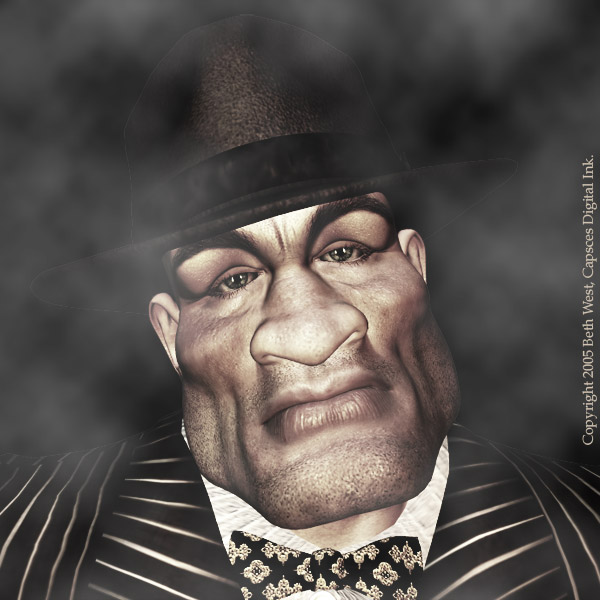
Unstructured Archetypes: The Thug
He is the bankrobber. He is the minion. He is the kidnapper. He is the extortionist
The Thug is a man.
Although the Thug shares much of the demeanor of the Brute, he is fundamentally human.
The Thug has a soul, albeit a small one. This means that the Thug can be redeemed, but it is unlikely.
The Thug is not a threat to the Hero. Quite the contrary.
His purpose is demonstrate the prowess of the Hero. He is a paper tiger and a punching bag.
He is nameless. He may be called Bruno, or Boris, or what have you, but these are only labels. In truth, he is a slate.
He is stupid, but he is aware of his stupidity.
He admires the intelligence of the Boss. He despises the intelligence of everyone else.
The Thug wants sex but cannot easily find it. Woman are repelled by him. His only option is force or prostitution. He is a lousy lover.
His moral universe is divided between the weak and the strong. He bullies the weak and cowers before the strong.
He has no history. He was not born, nor does he have a family. When he is killed, he will be unmourned.
He is vicious but not Evil. He lacks the intelligence to be Evil. He is, however, drawn to Evil as a moth to a flame.
He is a willing thrall. A slave. He freely subordinates his will to that of the Boss.
He has a dim but determined sense of loyalty. It is a loyalty predicated on fear and worship.
The Thug has no taste. He wears cheap suits, he smokes cheap cigars and he drinks cheap beer. To the extent that he has any relationship with women, they too are cheap.
If he wasn’t a bully, he would be pitied. On a deep level, he knows this. That is why he bullies.
The Thug has no God except for the Boss. The Boss is a wrathful God.
Sunday, August 26, 2007
Unstructured Archetypes: The Brute
He is the Cyclops. He is the Cave Troll. He is the Ogre.
He is male. He is, in fact, an exaggeration of masculinity.
The Brute is stupid. He is also evil. He is evil because he is stupid.
He embodies the Id. He destroys everything that he touches and revels in the destruction.
He is and agent of entropy.
There are only three things that he enjoys: eating, fucking and killing. If these can be combined, all the better.
He likes to fuck. He never asks permission to fuck. He does not perceive that this is rape, however, because there is no psychology to the act. He simply assumes that all women (and men) scream when they are being fucked.
The Brute is soulless. He did not sell his soul; he never had one to start.
He does not understand empathy or love. He doesn’t understand anything at all, really, except the aforementioned eating, fucking and killing.
Children are to be seen as appetizers.
The Brute is a monster but not a villain. He does not desire power or wealth. He is what he is.
The Brute may be employed by a villain. If this is so, the Brute neither understands nor cares to understand their relation. He will obey the villain only because the villain can hurt him.
The Brute can only be killed by a Hero or a heroic Sidekick. Anyone else who opposes the Brute will be killed, eaten and, perhaps, fucked.
He is too stupid to know that he is stupid. The Hero will usually exploit this.
The Brute is godless. The idea of God is beyond him.

Saturday, August 25, 2007
Unstructured Archetypes: The Warlock/The Witch
He is Sauron. She is the Baba Yaga. He is Voldemort. She is the Wicked Witch of the West.
He is a man. She is a woman. Neither is truly human.
They have vast power but their power is illegitimate and unholy. It was bought at the price of their soul.
They know things that Man Was not Meant to Know. This knowledge has corroded any remnants that have remained of their souls.
He is not to be confused with The Wizard who is a Mentor who knows magic.
If she is a woman, she is either a hag or inhumanely beautiful. If she is beautiful, she is only beautiful by virtue of her magic. She is, in truth, a hag.
He is old. If he appears to be young it is because he has used magic to preserve himself. Once the spell is broken he will be proven to be old and withered.
They are asexual. The only sexual acts that they will ever engage in will be as part of a dark rite. Any such acts will be perverse, shocking and blasphemous.
They have sold their souls to dark forces. They are damned and beyond any hope of redemption.
Although they have vast power, they will always crave more power, especially over others. This is the instrument of their downfall.
They believe in Good but they hate it. They hate it will a personal passion. Their choice to be Evil is deliberate and fulfilling.
They are sadistic. It is not sufficient to kill one’s enemies; they must be made to suffer.
They are Satanists. Even if they don’t worship Satan, himself, they worship Evil, which is the same thing.

Thursday, August 23, 2007
Unstructured Archetypes: The Companions
They are the Argonauts. They are the Merry Men. They are the 300. They are Odysseus’ Men.
They are men. Manly men! Women can not be Companions. Don’t be silly.
They may be Heroes in their own right but the Hero will be first among equals. This is his story, after all.
They are there to help the Hero on his Journey which may or may not be a Quest.
They are manly but not gay. There is no hanky panky in the camp.
They are dedicated and loyal. They will see the Hero through to the end and follow him into the Gates of Hell if necessary.
They aren’t wimps. Grrr!
They are vulnerable. They can be killed. However, unless they are killed by a betrayal, they will not be avenged. They will, however, be mourned.
They may have Sidekicks. Their sidekicks will almost certainly die before the Journey is over.
They know how to party but they also know when to Get Down to Business.
They aren’t always the brightest bulbs in the bunch. Lucky the Hero is around.
Sometimes they will have a False Companion in their midst who will betray them. The False Companion will die as a direct consequence of his Betrayal.
They probably believe in God but who cares? There’s manly stuff to be done!

Wednesday, August 22, 2007
Unstructured Archetypes: The Bad Mother
She is Cinderella's Step-Mother. She is the Wicked Queen.
She is a woman, but she has no womanly virtues.
She is evil. Worse, she is wicked.
She is a usurper. She steps into the place of the Good Mother, after the Good Mother dies, but she can not replace her.
She rarely has a name, only a title.
She is hateful.
She is jealous of the Good Mother’s child.
She is a witch and a bitch.
It is to be assumed that she is a slut and a whore, although we never catch her in the act.
She is a deceiver.
She wants to deprive the True Children of the Good Mother of their rightful place in the world. She wants to see them humiliated and killed.
She must be killed but only after she is humiliated.
She is dangerous and powerful.
She is an atheist and probably a Satanist.

Tuesday, August 21, 2007
Unstructured Archetypes: The Lolcat

The Lolcat is usually a cat, but not always. It may also be a dog, a furry rodent, or an aquatic mammal. Any cute mammal may be a Lolcat.
Owls may also be Lolcats. They were grandfathered in because an owl
was instrumental in starting the Lolcat craze.
The Lolcat is social. It always greets you with a friendly "Oh hai!"
The Lolcat is polite. It always says "Plz", "KThx", and "Scuze Meh".
The Lolcat likes to help you. It may clean your dishes, fix your pillow, buff your floors, even repair your computer. You may decide that its help is more trouble than it's worth.
The Lolcat has a Flavor. The Lolcat also knows that you has a Flavor, and seeks to taste it.
The Lolcat has no respect for personal boundaries. It will often get In Ur Property. Then it will start Doin Thingz to it.
The Lolcat may has a Title which relates to its appearance, disposition, or occupation.
The Lolcat can see Invisible objects and will often make use of them.
If a Lolcat is a cat, it has a Quest to find Cheezburgers. If a Lolcat is an aquatic mammal of any kind, it has a Quest to recover its Stolen Bucket. No other type of Lolcat has a Quest.
The Lolcat has Idiosyncratic Conjugation.
The Lolcat's favorite day is Caturday.
Beware a staring Lolcat. Its stare is a warning that It Is Not Amused. If you anger a Lolcat, you will soon need medical "Halp".
This article was contributed by Rob Berry. Rob is a programmer who lives in Hilliard, Ohio with his wife and three sons. He epitomizes the archetype of The Geek.
Sunday, August 19, 2007
Unstructured Archetypes: The Good Mother
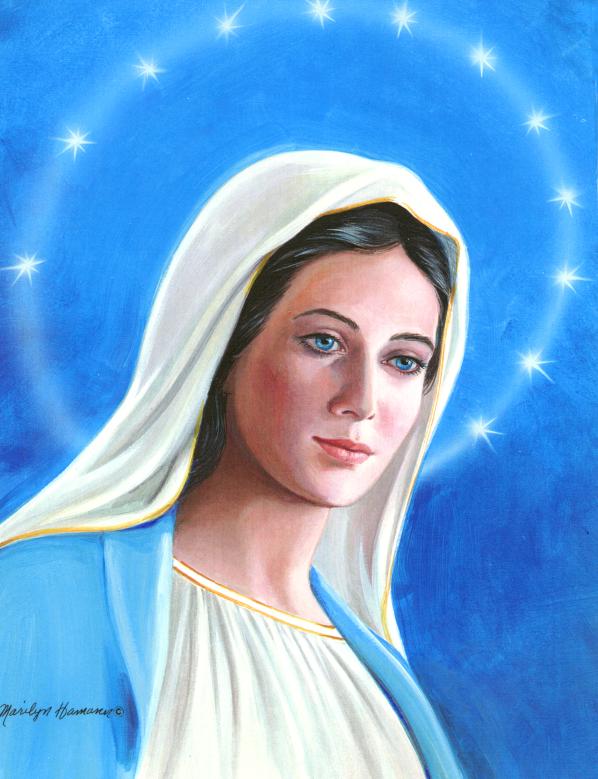
She is usually a woman but can occasionally be a man if he embraces feminine virtues.
She is the true mother. The Bad Mother may have usurped her, but she can not replace her.
She is nurturing and loving. She is not remote. This is her virtue but it is also her weakness.
She is to be protected by the Good Son.
She is to be despised and hated by the Bad Son.
She is the One True Love of The Father. It is never the Other One True Love of his.
She has no Legacy or Treasure to bequeath. She can only offer comfort and love. She may, however, pass only a bequeathment from The Father if he is absent.
When she is killed she is to be mourned and then avenged.
It is to be understood that she does not have sex with The Father. She is fundamentally chaste. This is a paradox and, yet, never the less true.
She is often a widow. If she is, she will remain faithful to The Father unless she is Seduced and Deceived.
If she is Seduced and Deceived, she will die, but not before she repents of her seduction and is forgiven because she is, of course, weak.
She is kind and charitable. This is part of her virtue but, again, also part of her weakness.
She wants to protect her children even though the Good Son needs to Go Out Into the World.
The Good Son has her love but can earn more by making her proud of him.
She is ageless but not old.
She is beautiful.
She believes in God. Her god is The Father.
Saturday, August 18, 2007
Unstructured Archetypes: The Scientist

The Scientist is usually male, though the Scientist can be female.
In the Scientist's own eyes, his work is always for the Greater Good. He believes himself selfless. He is arrogant, though he clothes himself in modesty.
He secretly relishes the fame his success will bring him. He honestly believes he is in fact The Hero. Yet he loudly proclaims his own humbleness.
The Scientist is not crazy or power hungry. His Quest is not for domination. His Quest is not for power or riches. He is not a Mad Scientist, nor is he an Evil Genius.
The Scientist is not good; the scientist is not evil. The Scientist is focused on achieving his goal and success and nothing else.
Obstacles to his goal will be swept aside by his brilliance. Side-effects are unlikely or impossible.
The Scientist never achieves his goal. The Scientist always succumbs to his Great Mistake.
In the instant of his Great Mistake, the Scientist realizes nobody should pry so deeply into the Great Mysteries.
Though the Scientist is not evil, his Great Mistake creates Evil.
The Scientist is all the reasons we should remain ignorant for Our Own Good.
The Scientist is always ultimately destroyed by his Great Mistake.
He finds atonement only through self-sacrifice, helping The Hero stop the Mistake.
The Scientist is functionally celibate; he is not a family man, even when he has a family.
The Scientist is often the father of the Hero's One True Love.
The Scientist does not worship God. God is either superstition, or the Ultimate Mystery; in neither case does God deserve the Scientist's worship.
At the instant of his Great Mistake, the Scientist realizes God has always been there and that the Great Mistake is attempting to usurp God.
This post has been contributed by Arturo Magidin. Arturo is a mathematician living in Louisiana. If there were such an archetype, he would be The Reader.
Friday, August 17, 2007
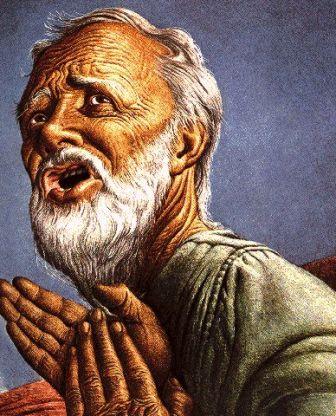
Unstructured Archetypes: The Father
He is Oberon of Amber. He is Abraham. He is Odin.
The Father is always a man. This may seem obvious, but it is not.
The Father is distant. The Father loves his children, but he is not close to them.
The Father children can be Heroes or Villains. When they are Villains they betray him and may murder him. When they are Heroes, they serve him and avenge him if he dies.
The Father is wise, powerful and frightening.
If the Father dies, he lives on in memory.
The Father does not intervene in the affairs of his children other than to express pride or disappointment.
The Father may bequeath a Treasure to a deserving son. That treasure may take the form of a Legacy.
All legitimacy flows from the Father.
The Father must not be questioned. To question the Father is to betray him.
The Father is not weak. If a father is weak, he is merely a parent.
It is possible for a Father to be fallible, but it is improper for a Son to point out his Father’s failings.
The Father is old. He is as old as time.
A Good Son will love his Father. Only Good Sons can become Heroes. Bad Sons who do not love their Father are doomed to become Villains.
A Father only has one Good Son. He may have any number of Bad Sons.
He may have daughters, but they are largely irrelevant except as items that his Good Son must protect.
The Fathers only overt expression of love is in the form of pride for his sons, which is reserved for those times when they have performed heroically and virtuously.
The Father does not believe in God. The Father is God.
Wednesday, August 15, 2007
Unstructured Archetypes: The Lovers
They are Romeo and Juliet. They are Antony and Cleopatra. They are Jack and Rose.
They are of both genders, but never of the same gender.
They can be both Hero and Victim.
The Lover’s story is tragic and romantic.
The Lovers are defined by their Beloveds.
Every lover is a Beloved.
The Beloved is similar to but distinct from the One True Love of the Heroic cycle.
The Lovers are both driven by and at the mercy of Fate.
Their moral universe is divided between their Beloved and all that stands between them and their Beloved.
Their love is pure and virtuous. There is a sexual component to the love but only in as much as it is an expression of love. Be that as it may, the erotic aspect can be charged and may take many forms.
The lovers will often die before they can consummate their love for one another.
They are young, naïve and optimistic.
Their love always takes the form of love at first sight.
If there is a Villain, the Villain’s goal is to keep the Lovers separate and to destroy their love. If there is no Villain, Fate will play this role.
A lover will either die in the arms of his beloved or at her side.
In the cases where one lover survives, it shall be the woman.
The Lovers are more prone to think about Heaven than God.

Friday, August 10, 2007
Unstructured Archetypes: The Swarm

The parts of The Swarm may be male or female, but the Swarm is none of these. Gender roles are irrelevant to The Swarm.
The Swarm is Many. The Swarm is made of many parts. Its components are living beings.
The Swarm is One. The Swarm is an It and not a They.
The Swarm is not Evil. The Swarm is not Good. The Swarm is amoral. It does not think in terms of Good and Evil, because it does not find those concepts useful.
If sex has any place in The Swarm, it is strictly as a method of reproduction. Sexual pleasure is unknown to The Swarm. Reproduction is all that matters.
New parts of the Swarm may be built in factories or grown in artificial wombs.
The individual is unimportant. All that matters is the good of The Swarm.
Each part serves The Swarm. Each part will sacrifice itself without hesitation to protect The Swarm. The Swarm is all.
The parts of the swarm may be able to think for themselves, but none of them truly have a Self. Any flickering sense of identity is subordinated to the whole.
The Swarm is often, but not always, caste based. Within a caste, all members are identical. There may be a leader or a ruling caste, or the group as a whole may make decisions. The former case must never be mistaken for individuality. The latter case must never be mistaken for democracy.
There are no names in the Swarm. There is only the name of the Swarm. There may be labels made of random letters or numbers, but these are not names.
The Swarm cares only about Itself. All other races and beings are either obstacles, enemies, or raw material.
The Swarm craves power and strength. The Swarm values survival and expansion. The Swarm does not tolerate inefficiency or imperfection.
Corollary: The Swarm shows no compassion and no mercy. It will eliminate any part of itself should that part show any flaw or any sign of weakness.
Second Corollary: Individuality is a flaw and a sign of weakness.
The Swarm is the ultimate xenophobe. It sees all other forms of life as weak, impure, and unworthy of respect.
The Swarm will do one of two things when it encounters the Other: Eliminate it, or incorporate it.
Assimilation is consumption. The only thing The Swarm retains are those things which improve its strength. Culture and identity are completely obliterated, save for those bits that The Swarm finds useful.
The Swarm is relentless. Once it has decided on an objective, it will never stop pursuing that objective. It can be driven back temporarily, but it will always return.
Every part of The Swarm is dangerous. However, the parts of The Swarm are crippled when they are separated from the Swarm. To the extent that they can, they will feel distress.
If you isolate a single part from the rest of The Swarm, it will either summon others or create new ones.
If isolated and cared for, a part may become a person and thus be redeemed. Such a person will be a potent weapon against The Swarm. The Swarm will go to great lengths to recover or eliminate these rogue elements.
The true danger of The Swarm lies in their numbers, their relentlessness, and their willingness to sacrifice themselves for the good of The Swarm.
You cannot intimidate The Swarm. The Swarm does not feel fear. Its parts have no instinct for self-preservation.
You cannot negotiate with The Swarm. You have nothing to bargain with. If you did, The Swarm would simply take it from you by force.
You cannot run from The Swarm. It is faster than you. It does not need to rest or refuel.
The Hero knows that The Swarm cannot be reasoned with. This never stops The Hero from trying.
The Swarm could easily defeat The Hero and his army, but The Swarm is arrogant. Its arrogance leads it to underestimate The Hero. This invariably leads to its defeat.
The Swarm can be defeated, but never *utterly* defeated. It always lives to fight another day.
The Swarm may view God as a fable for the weak, or it may view its own actions as the will of God. It may even view itself as God. Whatever the case, do not expect religious tolerance from The Swarm.
This post has been contributed by Rob Berry. Rob Berry is a programmer who lives in Hilliard, Ohio with his wife and three sons. He epitomizes the archetype of The Geek.
Thursday, August 09, 2007
Another Take on Archetypes
FYI, 10 Zen Monkeys have put together their own take on the subject in the form of a list of ten male archetypes. Rather than using classic archetypes, they use cultural icons such as John Wayne and Harry Potter on a sliding scale from most traditionally masculine to the most "sensitive".
Unstructured Archetypes: The Mentor

He is a man. There are no female Mentors. The nearest female Archetype is The Wise Woman.
The Mentor’s role is to guide the Hero.
The Mentor provides both moral and martial guidance. The former is the more important.
The Mentor is always older than the hero. He may also be of a higher social rank but this is not a requirement. Often the mentor comes from a place entirely outside of the Hero’s social system.
The Mentor will usually find the Hero, unless Destiny guides the Hero to the Mentor.
The Mentor is a keeper of secrets. His own origins are usually mysterious.
The Mentor knows how to fight but is not, himself, a warrior. If he fights, it is only out of necessity.
The Mentor can not defeat the Villain, nor can he Save the Day. He can provide vital assistance but he can not tread on the Hero’s domain.
The Mentor does not have a One True Love (unless she is buried deep in his past). The Mentor’s love is reserved for the Hero.
At some point, the Mentor will part paths with the Hero. This is necessary for the Hero to Fulfill his Destiny.
The Mentor is celibate; however, he can be Beguiled by a Fallen Woman.
The Mentor is both wise and learned. He is frustrated that the Hero is slow to learn.
If the Mentor is killed, he will be avenged. Avenging the Mentor must take a lower priority to avenging the One True Love.
The Mentor can be strict and can seem cruel, at times, but he is motivated by love for the Hero.
The Mentor is virtuous but tricky. He is also dangerous to his enemies.
The Mentor is spiritual but not religious.
Wednesday, August 08, 2007
Unstructured Archetypes: The Warrior
He is Achilles. He is Hercules. He is Conan. He is Red Sonja.
He is a man. Even when he is a woman, he is really a man.
He lives to fight. Combat defines him. He can go on Quests, but for him the point of a Quest is the combat to be had on the way to the Goal.
His moral universe is simple and monochromatic; however, instead of seeing the world as divided between Good and Evil, he sees it in terms of Friend and Foe.
If you are his Friend, he will love you unconditionally. If you are his Foe, he will hate you unconditionally. There is no middle ground. If you are neither Friend nor Foe, you are basically invisible to him.
The Warrior is a killer. He sees no moral conflict in killing a Foe. Leaving a Foe alive is a moral failing.
He is basically a good person but can do Bad Things.
The Warrior will sometimes kill Friends or Innocents. This will only happen as a result of rage or drunkenness. When it does happen, he will be regretful and repentant. He will need to go on a quest for Redemption. This Quest will require him to kill lots of Foes.
The Warrior does not have a One True Love. To the extent he thinks about women at all, it is as conquests or rewards for conquests.
He likes sex, especially when it takes the form of wenching. He is not, however, kinky. He prefers straightforward copulations.
The Warrior will never Put Down his Sword. He can only Die in Combat. The thought of dying in bed is shameful to him.
He doesn’t trust intellect. The solution to all problems is a sufficient quantity of force. His specialty is jamming square pegs into round holes.
He probably believes in God but doesn’t really care what God thinks.

Monday, August 06, 2007
Unstructured Archetypes: The Detective
He is Adrian Monk. He is Sam Spade. He is William of Baskerville . He is The Question.
He can be a woman, but is usually a man.
The Detective’s life is defined by Quests that take the form of a mystery.
Unlike a normal Quest, which is to acquire Something or to defeat a Villain, a mystery is a Quest where a Puzzle needs to be solved. To be sure, the solution of the puzzle will often be the fulcrum of the villain's defeat.
The Detective’s moral universe is stark but complex. Good and Evil are distinct but telling one from the other is difficult.
He is vulnerable to the Femme Fatale. He is prone to mistake her for his One True Love.
On those rare occasions where he does find his One True Love, she will inevitably be killed. He will then avenge her.
Unlike other Heroes, the Detective can have many One True Loves.
Not all Detectives are detectives, nor are all detectives Detectives.
Neither Batman nor Sherlock Holmes are Detectives. They are Competent Men.
The Detective is fallible. He can be misled and deceived. He can also fail to get the bad guy. Alone among Heroes, he can remain a Hero even when the Villain wins – at least for the moment.
His life is tragic. It is defined by his mistakes and his losses and much as by his successes.
His friends tend to die. Never the less, those friends he has are loyal to him.
His greatest weapons are his wits and his luck. When things are at their worst, he’s prone to have a Stroke of Luck, often as a result of Thinking on his Feet.
He is street smart. He may also be educated but his most critical skills are being able to judge others, to spot inconsistencies, and to see through deceptions.
He can usually fight but he isn’t a warrior, much less a soldier.
He is lonely.
He is often an atheist although he wishes that there were a God. Above all else, he believes in Justice and despairs of ever finding it.

Sunday, August 05, 2007
Unstructured Archetypes: The Special Boy

He is Arthur. He is Luke Skywalker. He is Harry Potter.
The Special Boy is always a boy. There are no Special Girls. The nearest female Archetype is the Secret Princess.
The Special Boy does not know he is a Special Boy.
The Special Boy is probably an orphan. It’s a safe bet that his parents were killed, perhaps right in front of him.
The Special Boy has a birthright. He is Special from the moment he is conceived. He is better than everyone around him.
The Special Boy is raised in Lowly Circumstances. He is usually at the bottom of the social order and is even looked down upon by those who share his social status.
No one who doesn’t know he is Special thinks that there’s anything special about him. Most people think that he’s stupid and weak.
More often than not, he’s picked on and bullied.
The Special Boy only learns that he is Special when he has an Encounter with Destiny.
The Special Boy does not try to find his Destiny. His Destiny finds him.
He is virtuous. He exhibits his virtues even before his Destiny is revealed.
Before the story is over, the Special Boy will be acknowledged and acclaimed. Those who mistreated him will feel bad about it. If they apologize, he will forgive them.
The Special Boy is defined by his Destiny. Often his Destiny will take the form of a Cryptic Prophecy.
Once he has had his Encounter with Destiny, the Special Boy will find a Mentor. His Mentor will serve as his surrogate Father. Unlike the real Father, the Mentor will never be distant or overly stern.
The Special Boy will grow up to be a Hero. Most of the heroic archetypes are open to him. The Special Boy will never grow up to be a Villain or an Everyman, although he may have Lapses.
Sooner or later, the Special Boy will experience a Rite of Passage. The Encounter with Destiny may be the Rite, or the Rite might be delayed (possibly taking the form of Defeating the Villain).
Until the Special Boy has had his Rite of Passage, he will be subject to doubts and may even Question his Faith. Once the Rite has happened, this is no longer a risk.
If the Villain killed the Special Boy’s parents, he will need to avenge their deaths, even if he never knew them.
The Special Boy can have a One True Love but he may not consummate that love until he Becomes a Man. Any displays of affection must be basically chaste.
The Special Boy believes in God.
Friday, August 03, 2007
Unstructured Archetypes: The One True Love
She is Maid Marian. She is Penelope. She is Princess Buttercup.
The One True Love is invariably a woman. The nearest archetypal equivalent is Prince Charming.
The One True Love is virginal. Only the Hero can consummate her love.
She may be a low-born woman but she can never, ever be a Fallen Woman.
She does not crave sex. She is more than happy to provide sex to the Hero (once he has Proven Himself and only within the Proper Context), but sex isn’t her goal.
She does not have sex on-screen (or on the page). It is assumed that she has orgasms but that is not to be spoken of.
She is decidedly not kinky. It can be assumed that the One True Love prefers the One True Position.
Although she usually experiences Love at First Sight upon seeing the Hero, her love must, never the less, be won through adversity and peril.
She is vulnerable. She can be killed. If she is killed, she will be avenged. Avenging her will always be the Hero’s first priority.
The Hero will always be faithful to her (in heart if not in body) unless she Lapses and becomes a Sinful Woman, in which case he will have the option of finding his Other One True Love.
The Villain will often crave her. If he does, his goal will be to Ravish her. If the Villain succeeds, the ravishment will be fatal so that the Hero can avenge her. No One True Love ever survives being ravished.
If she survives and the Hero Puts Down his Sword, she will birth him at least one son. This is an implicit part of living Happily Ever After.
The One True Love is never barren.
If she has children, she will become a Good Mother. This does not negate her status as the One True Love.
The Villain may imprison her. If this happens, she will need to be Rescued. Only the Hero can Rescue her. He must do so before she is ravished.
If she falls ill – usually because she has been cursed or poisoned – the Hero will need to take up a Quest to Find a Remedy. She will always be cured of her illness, but only in the Nick of Time.
If the hero has Loved Another, she will fulfill the role of the Other One True Love. She will not question the Hero’s love for her, nor attempted to denigrate his previous love. Regardless, she, herself, may never take another lover without become a Sinful Woman, even if the Hero chooses to leave her.
The Hero's love for The Other One True Love will never be as deep as for the One True Love, but it will be strong enough.
Her only defense against harm is her virtue. If she remains virtuous, she may be protected from Evil (or may not, in which case the Hero has to avenge her); however, if her virtue lapses, she is invariably doomed to suffer and probably die.
If her virtue lapses, her only hope is to Repent of Her Sinfulness. If she repents, she may be saved but she will never again be the One True Love.
She believes in God and is a godly woman.

Thursday, August 02, 2007
Unstructured Archetypes: The Paladin
He is Luke Skywalker. He is Galahad. He is Yojimbo. He is Superman.
He is a man. In principle, he could be a woman, but this never seems to actually happen.
His virtue is his greatest asset. The Villain may be smarter, wealthier, more powerful, but he will always defeat the Villain because of his innate goodness.
He is spiritual. He is also a warrior.
He is not a sexual being. He values love (and may have a One True Love), but does not put any value on carnality. His ideal love is unrequited. If he does have sex, it is only so that he may have a son to take his place.
He is on a Quest. He may not Put Down the Sword until the Quest is complete.
Once he Puts Down the Sword, he may rest, but there is always the possibility that he may need to Pick Up the Sword again.
He will avenge his comrades but he will not take vengeance. He gains no joy in defeating the Villain. It is simply a moral necessity.
He is a protector of the weak. He may suffer insults but he will never stand for allowing those who are defenseless to be bullied or terrorized. Protecting the weak is the only thing that can detour him from his Quest… but only for a time.
The Quest is his First Love. He may also have a One True Love, but she can not prevent him from Taking up the Sword and Going on a Quest.
He is holy, but he will deny this.
He can be betrayed but never corrupted. Those who become corrupted were only ever False Paladins. This is not a circular observation. The virtues of a True Paladin are innate and incorruptible.
A Paladin can become Lost. He may become confused by evil and lose his way. If this happens, he will need to take a side-quest to redeem himself. Only then can he continue his Quest. Never the less, he remains incorrupt.
His moral universe is stark and simple. He believes in Good and Evil and he knows the difference between them.
Honor is the highest virtue. Without honor, there is no virtue.
He will not take advantage of his enemy’s weaknesses. He will meet his foes only in honorable combat. The notion of sneaking around and stabbing his enemies while they are off-guard is repugnant to him.
He is a soldier and he may fight in battles and in defense of his Liege but, ultimately, he Fights Alone.
It is likely that he has a Mentor. In some rare cases, he will have more than one.
His primary source of education is the Spiritual Quest. It is far more important that he learns how to be virtuous than it is that he learns to be lettered. He values wisdom above knowledge.
He knows God to exist but he does not proselytize. He leads by example.


